
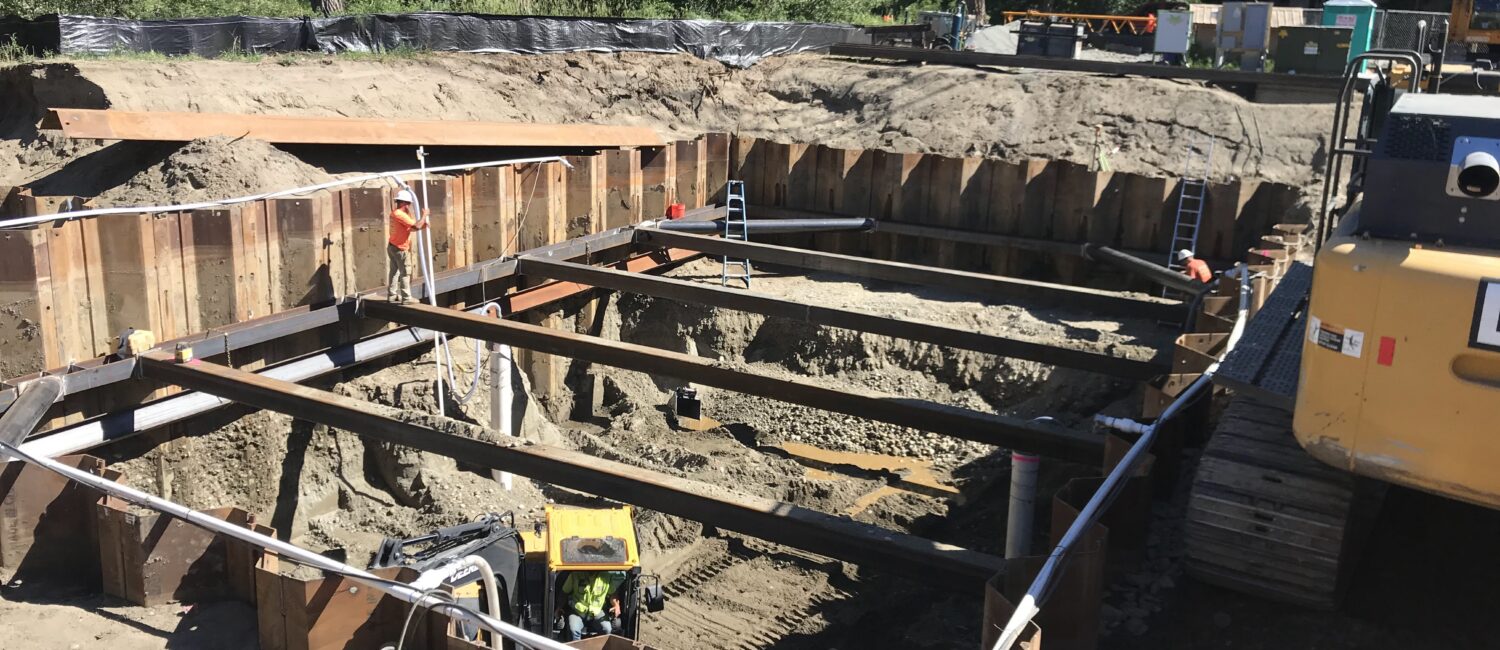
Supplying reliable irrigation to over 200 households, Cascade Orchard Irrigation Company (COIC) is a key piece of infrastructure for residents in the lower Icicle Valley. I sat down with Tim Walsh, President of COIC, to discuss the newly completed COIC Modernization Project. A lifelong advocate for salmon, Tim has been closely involved with the effort for the past decade and shared insights on the project’s journey to support both people and the river.
Q: Can you start by explaining what this project is all about, and what inspired it?
A: The project is trying to do a couple of different things, including putting more water back into Icicle Creek – a primary goal of the Icicle Work Group. COIC has the oldest water rights on the Icicle, but the gravity fed irrigation system was very antiquated and required constant attention. It had its weaknesses in the sense that it diverted significantly more water than the shareholders were using. The goal for this project was to get water back into Icicle Creek to benefit the aquatic habitat, while simultaneously providing the shareholders of Cascade Orchard Irrigation System a better way to get water. The result is a more efficient pump-back, pressurized irrigation system that allows shareholders to continue using the water, while simultaneously retaining more water in the Icicle.
Q: What was the spark that started this project?
A: Chelan County Natural Resource District (CCNRD) had been communicating with COIC for at least 15 years. Additionally, Daniel Wilkenson, a past COIC president, started conversations with Washington Water Trust (WWT) about the benefits of a project here. Those relationships were the catalyst for the project.
Q: Who has been involved in making this project possible?
A: WWT, COIC and Anchor QEA were the trifecta that gave the project traction, along with Strider Construction. There was a shareholder advisory group pulled together by WWT and Daniel Wilkenson – that’s where I became involved with this project. We helped formulate a plan and a list of contingencies that we thought the shareholders would accept and put it to a vote. WWT was working with Anchor QEA for the preliminary design; Anchor ultimately designed the entire project. WWT was working from the water rights perspective of the whole thing. Ultimately, the groups that got us across the line were the Icicle Work Group and the CCNRD, executing the design via the contractor, Strider Construction. I don’t think the project would have happened without CCNRD stepping in and managing it.
Q: How does improving irrigation efficiency translate into more water in the stream for salmon?
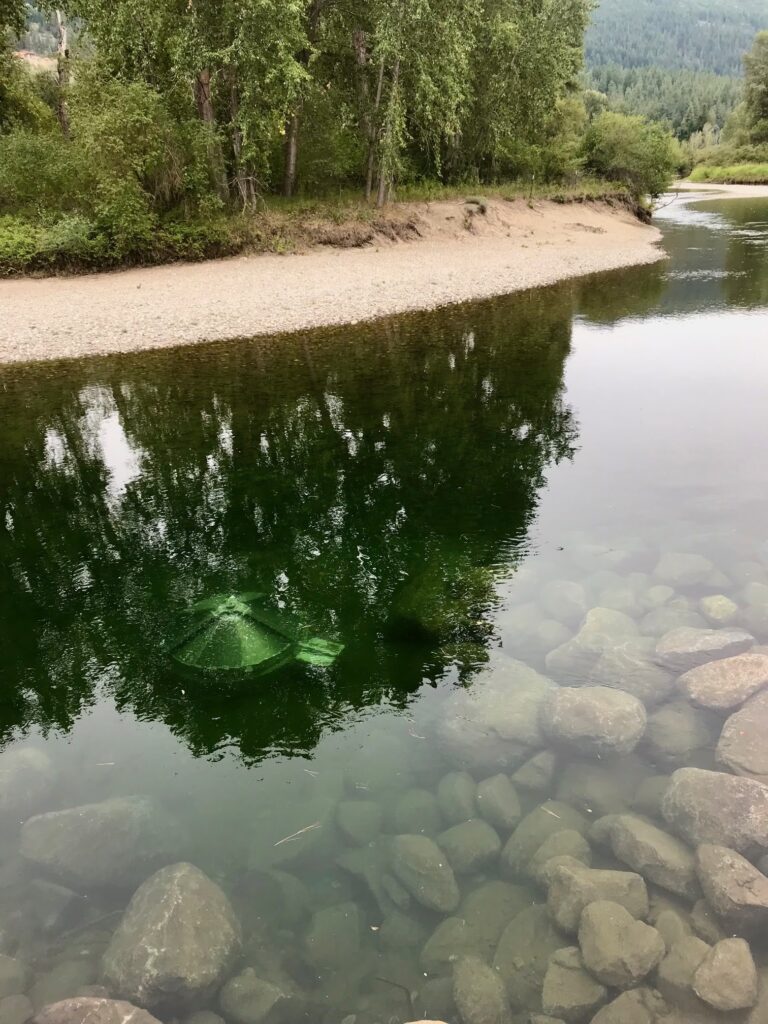
A: We are moving away from the mechanics of a gravity-fed system to gain irrigation efficiency and increase streamflow. In the previous system, water had to run all the time, even when people weren’t using it. In a gravity-fed system, more water than is consumed must flow through to maintain water movement. If a shareholder needs one gallon of water, two gallons must be sent down the ditch, or the last person down the line gets nothing. In our case, we were diverting water from the Icicle into the Wenatchee River so that pipes along the ditch could divert that water to our shareholders. This effectively robbed the Icicle of unused water. With our new pump system, the amount of water drawn from the Icicle automatically adjusts to shareholder demand. So, less demand means less water needs to be taken out and what isn’t used stays in the Icicle.
Courtesy of Tim Walsh
Courtesy of Tim Walsh
Q: Have you seen any measurable changes in the river since the project began?
A: It’s been too short of a time frame to see any measurable change in habitat yet, but I think that we’re a drop in a bigger bucket and there is a cumulative effort happening that just hasn’t come true yet. However, thanks to this project, there are an additional 12 cfs* remaining in the Icicle River from the original diversion point, which we shared with Leavenworth National Fish Hatchery, to where the new pump station draws water today. If we keep watching, I know we will eventually see more salmon, and habitat on the Icicle will benefit as a whole.
*editor’s note: Cubic feet per second (cfs) is a common way to describe water flow. It tells how many cubic feet of water pass a point each second. One cfs equals about 450 gallons per minute.
Q: What kind of benefits are the residents seeing?
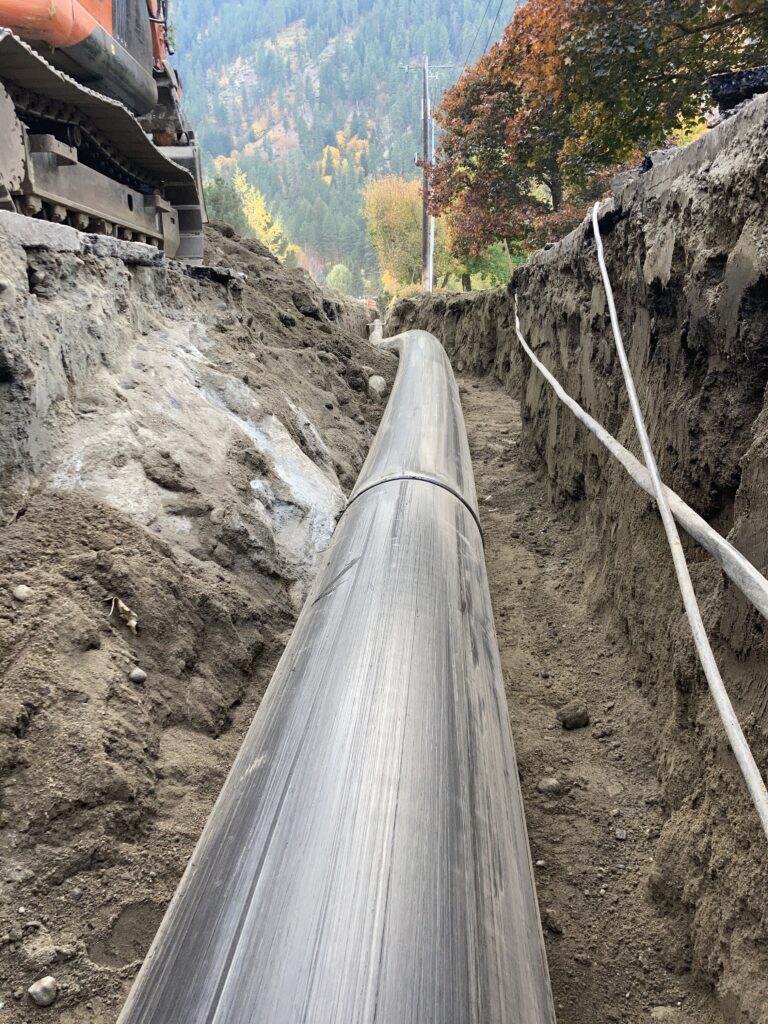
A: The most amazing benefit is higher water pressure. With the gravity-fed system some homes got more water pressure than others and many shareholders had to pay for their own pump system just to get sufficient water. Now, we deliver pressurized water to everyone’s parcel. Residents constantly tell us: “This is great – we have water!”.
Q: What has been the most rewarding part of this project?
A: Finishing! Over 10 years ago we had a board meeting and talked about sending volunteers to meet with WWT and start this conversation. There were so many hurdles along the way that seemed impossible to clear. I’ve never been involved in something that took so long to come to fruition, so seeing it work today is pretty amazing. My message to any other entity thinking of a project like this is that both water users and habitat will come out ahead. It’s a win-win.
To learn more about this project, and other Icicle Work Group projects, check out their webpage!

